The Best Thing About Tennis Isn't Always The Tennis
How two Laver Cup strangers became tennis besties heading to Roland-Garros.
By Allen McDuffee, Court Theory
The first thing Ashleigh Gerlach noticed about Sadia Rahman was the heels.
On the eve of Laver Cup 2025, the Topnotch group gathered in the lobby of their hotel, preparing to walk down to dinner. Down being the operative word. This was San Francisco, all steep grades and unforgiving pavement. And there was Sadia, impeccably stylish and unwavering in her commitment to those high heels. She took one look at that decline and made a decision that would become the trip’s first great story: she got an Uber. One block. Both ways.
As Ashleigh watched in amusement from a distance while Sadia made her calculations and eventual resolution, she recalled thinking to herself, “Has this girl…did she know we were coming to San Francisco?”
From Sadia’s point of view, getting done up — heels and all — was partially strategic. She wanted to make a good first impression that night. This was Sadia’s first trip with the group, which meant she had concerns she would be the only one without existing friendships to lean on. Everyone else had history together — shared trips, inside jokes, a shorthand she hadn’t earned yet.
At dinner, she stuck close to Topnotch tour host Megan Collins, which made the experience more comfortable, even if a little guarded. “It was a little bit more awkward for me,” Sadia admits, “because everybody was kind of familiar with everyone else.”
Ashleigh was sitting just one seat further down. And, as Megan stepped away to attend to her tour host duties, she looked left, looked right, and made the introduction: Sadia, Ashleigh; Ashleigh, Sadia. The two turned to each other and never really stopped talking ever since.
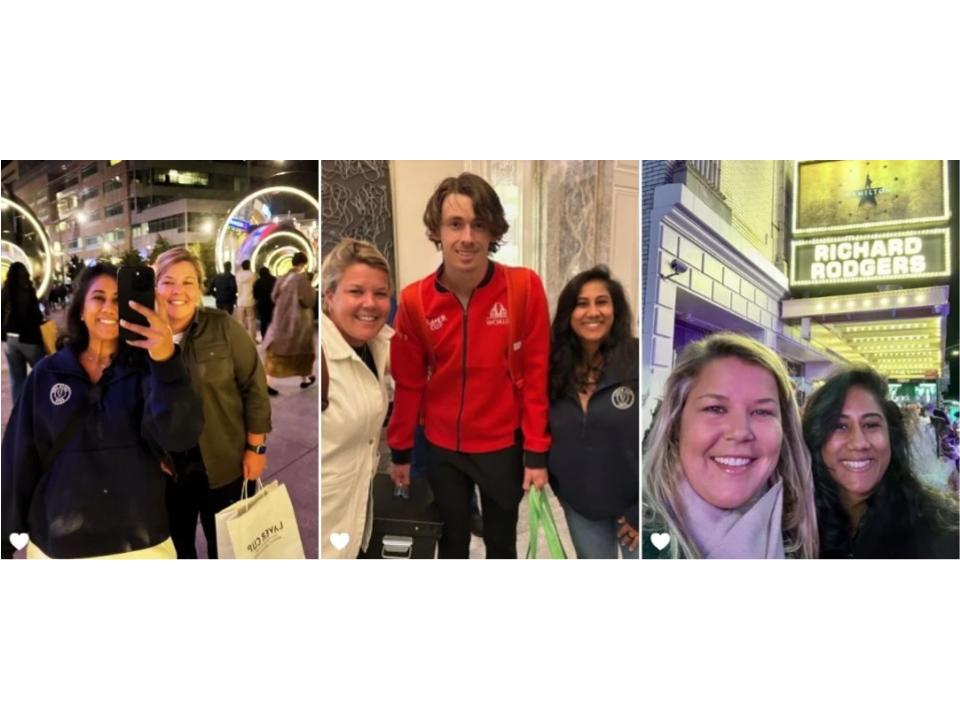
The real conversation came the next day during a group tour of Alcatraz. Both women had done the tour years ago with their families, but they joined the group anyway and eventually drifted off on their own. What started as getting-to-know-you small talk about Sadia working as a medical coder in New York City and Ashleigh being a nurse in Columbus, Ohio quietly became something else entirely. “We just ended up kind of diving into all things life,” Ashleigh says.
That’s a modest way of putting it. The two bonded over their shared experiences before the conversation deepened quickly. They talked about Ashleigh’s divorce and the end of Sadia’s long-term relationship, what it’s like being a thirty-something in the dating pool, decision-making over motherhood, and what they wanted their futures to look like. By the time they left the island, they knew things about each other that take most friendships years to reach.
“I don’t know what she did,” Ashleigh said with a laugh. “But I just felt such a natural connection.”
Part of it, she thinks, was finding someone like-minded and roughly the same age — someone who understood the particular terrain of being a single woman in her thirties, navigating questions about relationships and family and what comes next. When Sadia started talking, Ashleigh recognized the landscape immediately. And she suspects Sadia felt the same.
Indeed.
“I didn’t feel at any point that she was judging me,” said Sadia. “There was no time that I thought, ‘Okay, Sadia, don’t say that.’” That’s a small thing to say, but a significant thing to feel as a woman of color. There’s a particular self-consciousness that can come with that, a quiet calibration of what you say and how you say it. With Ashleigh, that filter was completely unnecessary.
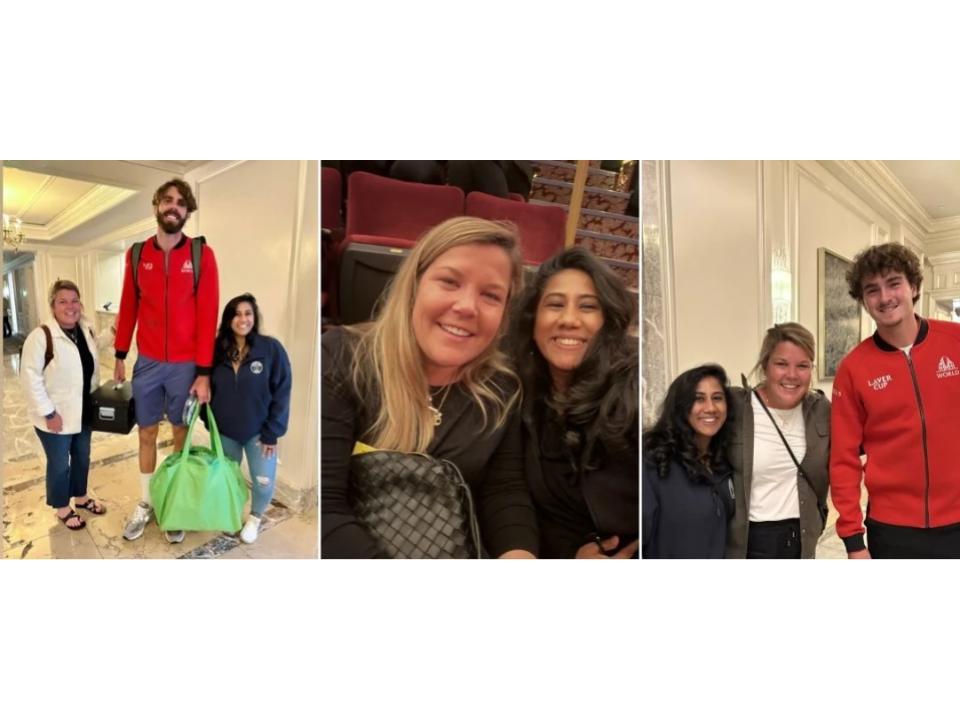
Over the next few days in San Francisco, the two were virtually inseparable. At the morning clinics, Ashleigh noted they were complementary forces to be reckoned with: Sadia had the “beautiful topspin and feel to my flat, ball-bashing.” At the Chase Center, they checked in on practice sessions, caught all the Laver Cup matches, and did a round of shopping during each intermission. They marveled at how approachable all the players and captains were, even if Ashleigh had to show Sadia the ropes of how to properly ask for a selfie with them. It was an upgrade from Sadia’s drive-by style of pausing in front of them, snapping a candid pic, and hoping for a good outcome.
They kept talking after the trip ended. About dates, about tennis, about all the mundane and significant things that fill life in-between. What started on a bench on Alcatraz became a running conversation that’s still going.
The friendship has already charted its next chapter. For their next trip, Ashleigh floated the idea of Roland-Garros to Sadia. The answer came quickly: I’ll meet you there. Ashleigh handled the logistics — an arrangement that suits Sadia perfectly, given that she cheerfully describes herself as “not a planner.”
The organizing was easier, though, since they knew they would lean on Grand Slam Tennis Tours for their first French Open experience. “After Laver Cup, I knew I didn’t want to travel with any other company,” said Sadia. “Right from the start, it felt like quiet luxury. Every wish was already taken care of, and someone was available if I needed them without the stress of somebody always hovering over me. Everything was just easy. Now we’re just finalizing extracurricular excursions in Paris.”
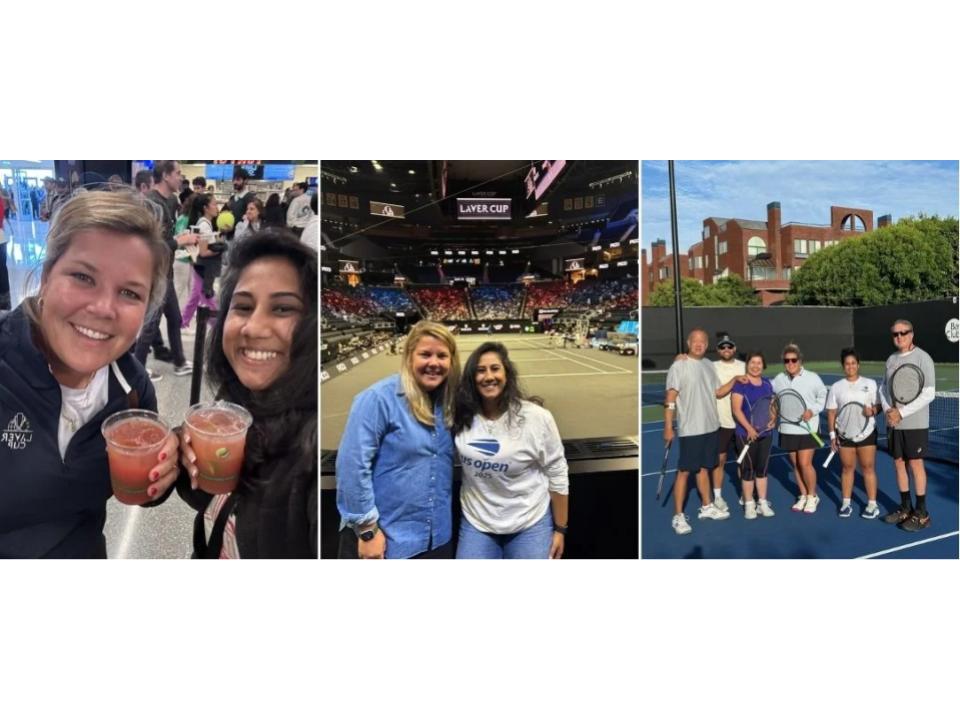
There’s already talk of more. The Laver Cup again, this time in London, which they both love. The Australian Open someday, although that requires more runway. The list keeps growing, and so does the sense that this is simply the beginning of a long series of trips together.
“It’s really exciting to know that I have someone who’s as passionate about watching tennis as I am,” Sadia says, “and that we can go to all these different places and experience these things together.”
Tennis has a way of doing this — assembling people who wouldn’t otherwise find each other, then giving them something immediate and real to share. The sport is the entry point. What grows from there is its own thing entirely.
Ashleigh is also quietly rooting for something else: getting Sadia back on the court for competition. She hears Sadia’s hesitation — the perfectionism, the fear of letting a doubles partner down — and recognizes it as something only tennis can actually fix. “You get the right partner,” Ashleigh says, “and you’re not going to let anyone down. We’re out there to have fun.”
Ashleigh has her own history with that kind of reluctance; she wasn’t so sure about accepting a friend’s casual invitation to return to tennis during the pandemic. At the time, she had no idea what she was saying yes to. Since then, she’s become a regular on the court and in local leagues. She’s been to London, Monte-Carlo, Indian Wells, Cincinnati, and the U.S. Open. And she travels alone now without thinking twice about it, racket in hand, which she describes as her security blanket. Tennis gave her that confidence.
Sadia didn’t go to San Francisco expecting to come home with a close friend. She went for the tennis, for the experience, for the chance to do something new. She got all of that. She also got Ashleigh — someone who let her be completely herself right from the beginning. 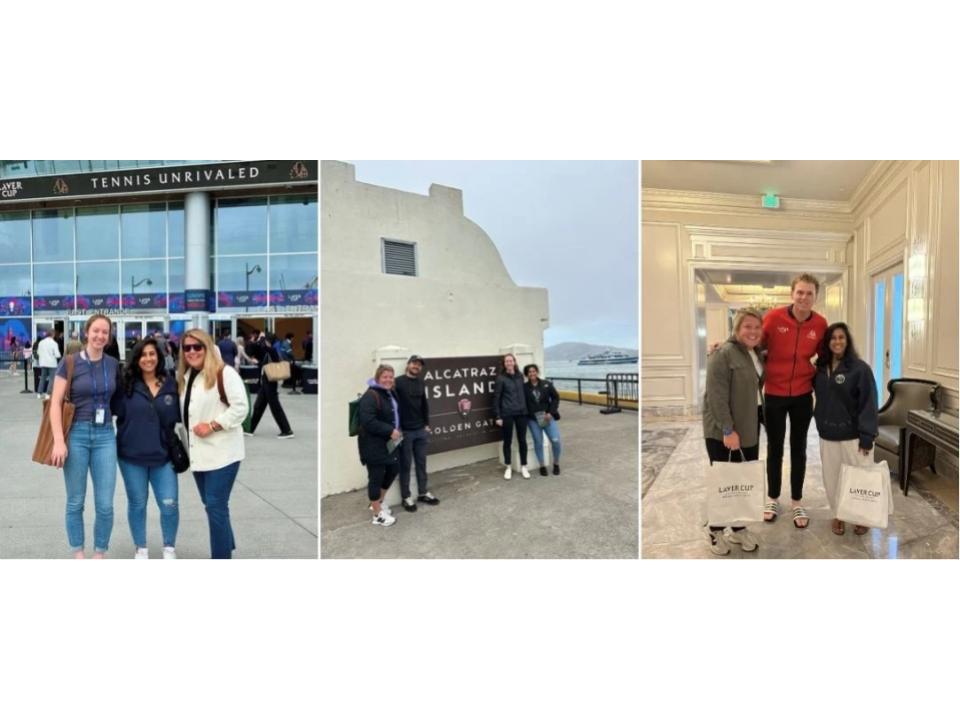
“To this day,” Sadia says, “it still remains the same.”
Allen McDuffee is a journalist and the founder and editor of Court Theory.